Confessions of a Liberal

There. I said it.

For years, I denied that I was liberal. I hated the tag. I claimed to be agnostic when it came to politics. I said that I was registered Independent (true) and that I just looked for the best candidate. I also claimed to be fiscally conservative and socially liberal…my slippery slope, but also true.

Somehow, in recent years, it has dawned on me that I have either migrated left or simply found the right more and more distasteful. That bears some ‘splanation though, as I have many friends who are conservative (doesn’t everyone say that?) and I love them, and respect them. In fact, even while I am prepared to embrace the ‘liberal’ tag, I do still agree with some conservative precepts, some of which have to do with international policy and some with regards to domestic fiscal policy.

What has spurred me to look in the liberal mirror is a combination of things. Trumpism is certainly one of them, but more than that I find the fact that conservatives/Republicans’ interest in following Trump – even as he has faded from sight – to be disappointing. I don’t know what happened to the Republican party of Reagan, or even the Bushes! They seem to make every decision based on how to turn back the legacy of Barack Obama.

I have to admit that the Democrats are a noisy, disorganized lot who do a lot of whining and finger-pointing. Not sure I identify with them, but that’s different from just being liberal.

My confession comes from my realization that my belief in social structures to support poor people, globalization of economies and the world in general, protection of the environment, protection for gays, #blm, climate control, vaccination (duh)…all of those things that I believe in seem to make it clear that I am a liberal in this day and age. I don’t particularly care for labels, but I guess I am one.

So there. phew.

Father’s Day

Most of me thinks of this as a silly holiday, invented by Hallmark and the other companies that just want to sell cards and gifts. I don’t need a holiday to remind me that I’m a Father.

But then I hear from my kids…and I remember that I’m not just a father. Anybody can be a father, but I’m a Dad, and a Daddy. That’s different.

I have had a lot of jobs in my 40 years of working, since I got out of college in 1981. Most of them – probably all of them – have been rewarding to a large extent, even the ones that ended poorly (never my fault, of course). The one job I have had for 32+ years now is being a Dad. It is the best job I ever had. I think back on those 32 years and I know there were some tough times (ever had teenagers?) but all I really remember is the wonderful times. And – thanks largely to my ‘never give up’ wife, they all turned out well. Not just well, but actually great, on every level. They are all industrious and hard-working (from marketing to banking to medicine to entrepreneurship) but that’s just the tip of it, the indicator that they turned out well as humans. They all grew up wiser than I was at their age, more worldly and better global citizens. Some of that is due to the advantages we gave them – living and traveling around the world is not something everyone is lucky enough to be exposed to at a young age. But a lot of it is values. They care about the right things – some of those things are human rights, #blm, and the human condition…but again you have to scratch below the surface to see where it all comes from. They care about other people, not just themselves.

Every once in a while one of my kids will accuse another of being selfish. But you know what? It hardly ever happened, and that’s because none of them are actually very selfish. They try hard to see the world through others’ eyes, to recognize their own built-in biases and overcome them. That is truly great stuff, and it’s about values. I wish I could say that their mother and I taught them all that – and of course we do give ourselves credit for establishing that foundation when they were young enough to sit on my lap or ride on my shoulders – but they developed on their own. They developed at their own pace, in different directions in some ways, but always stayed together.

That’s one thing I am more thankful for than anything else as I pause to think about father’s day. We are all still together. We are still a family. We still love each other. We go out of our way to hang out – and that’s hard work now with them living and traveling all over the world.

They will all be here in Maine for July 4th, 2021. I can’t wait. As I look at them, watch them interact, share a beer with them and build a fire in the firepit, I will think just how goddamn lucky I am to be a dad.

The Nature Fix

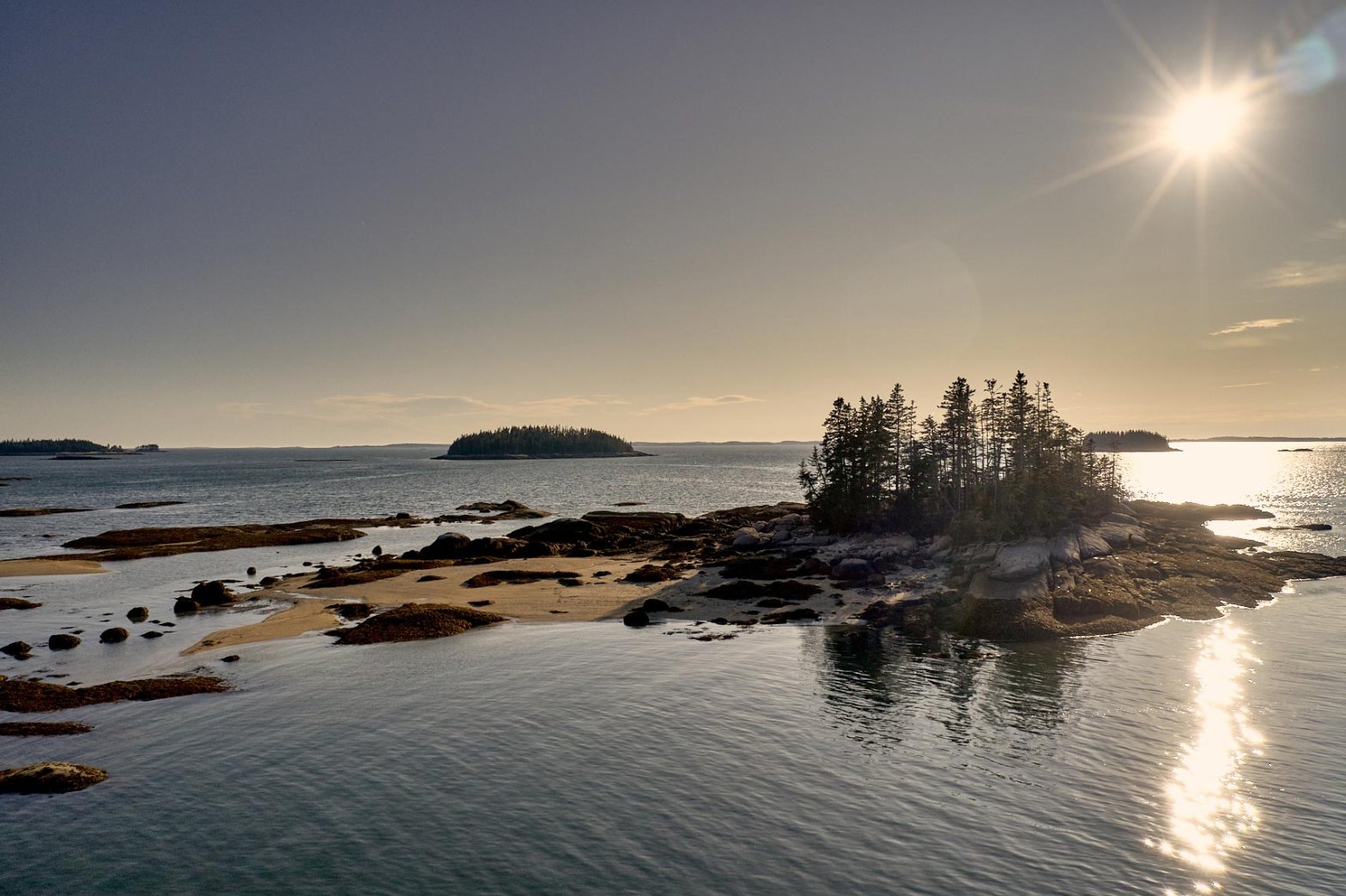
Sometimes I like to write about a book I am reading. This is one of those times. I am living up in Maine, probably through the summer (it is 2021) and while I am working most of the day on zoom, when I have a break or on weekends, I am out in the fresh air, forest, pine trees, or on the water in a kayak. All of those things I do with our dogs (except the kayaks – they are not very cooperative in that regard). I’ve always known that this place makes me feel good. Since I was a little boy, there was something about arriving on Deer Isle, over the bridge and then across the causeway, that changed my mood. We put the windows down on the causeway (always) let the sea air in, breathe it in and let it do its magic. I can almost feel my blood pressure go down.

So I started reading The Nature Fix, by Florence Williams, mostly because my son recommended it. He worked at LL Bean in the winter and the book was sold there. I started reading and it jarred me, as the author recounts study after study about how nature indeed fixes us. The first chapter spoke about a study in Japan that claims that evergreen scents are almost like a miracle drug. They measure something called NK cells (whatever those are) and how the body gives off more of these (presumably this is a good thing) when around the scent of evergreens trees. Many japanese now ever use a humidifier with cypress oil each night in the winter. The scientist, when interviewed at his university lab in Tokyo, was asked “what else do you recommend.” His answer?

“If you have time for a vacation, don’t go to a city. Go to a natural area. Try to go one weekend a month. Visit a park at least once a week. Gardening is good. On urban walks, try to walk under trees, not across fields. Go to a quiet place. Near water is also good.”

I feel so lucky.

Back to Work

I recently decided to go back to work. It’s worth reminding all of my loyal readers out there (hello???) that I took pretty much the whole pandemic off from (for profit) work. I had finished working for a london-based fintech, the company was sold to Visa, I did about 6 months at a startup until it ran out of funding and then decided to just focus on non-profit work. I chair the board of Junior Achievement of Greater Fairfield County (JAGFC) and took up some pro bono consulting for other non-profits in the area, such as the Catholic Diocese and a couple of Community Colleges based in the area.

So, when an old friend called me, I was up in Maine, pandemicking with the family last fall. “What are you doing?” he asked. I was digging holes, planting stuff my wife told me to insert into those holes, hiking with the dogs, and enjoying periodic work episodes with the non-profits I was dealing with. My old friend had just taken a role as CEO of a mid-sized software company and needed a Chief Revenue Officer. It never hurts to talk to people, so I engaged with him and got interested. It took a while, but I was in no rush, and it was good to get to know the people involved….and then I joined!

I have been back at it for a month now – long days, dealing with clients, personnel issues, process issues, teamwork with colleagues, the whole nine yards. Some friends ask me why I went back to work, like it was the craziest thing they could think of.

After reflection, I have to admit – I like working! That’s the simple answer.

Yes, I was relaxed during this past year, able to read the paper each day, go for long walks with the dogs and my wife, read a TON of books (over 60 books last year) which I loved. However, the stimulation of work is a turn on. I like building teams, especially global teams. I like dealing with clients and cutting deals.

So there – that’s the reason; thats the answer. Take it or leave it..for now.

Restocking

My kids grew up and left home. This is as it should be and of course we make extraordinary efforts to see them whenever and wherever we can. The also took our cars, which are now their own. Then they took our dogs (except my first, who got her own dog), so we figure it’s time to start restocking. First I bought a new car…needed it for the new job, since we only had one car between the two of us. Then we got this little dwarf shown in the photo above, sinking drunken songs (“wasting away again in Margaritaville” comes to mind) with his new older sister. His name of course is Gimle, named after the lead dwarf in Lord of the Rings. My wife wanted a small dog. My wife usually gets what my wife wants. (This took me many years to get used to)

The Second Phase of Adulthood

I have appropriated Charles Blow’s OpEd today in the NY Times, because it is so good. I am with you, Charles – also in the 3rd trimester of my gig, with more summers behind me than in front of me. I love the way he talks about relationships with his kids. My four kids are also grown and out of the house (2 off the payroll, one in medical school and one starting his own business). My relationship with them has always been good, but it is now evolved and I just love hanging out with them; they are friends as much as my kids. I do sometimes still offer help and counsel when they ask for it, but they are more and more independent every year, and it’s wonderful to see. I hope they will always believe they need me, and I know that I will always need them…probably more and more as I age. (maybe especially the doctor!).

I have recently gone back to work, at age 61, and I am doing it because I really like working. I like building and leading teams, I like leading sales organizations and I like being part of a high energy organization, like the software company I have just joined. I guess I just was ready to be ‘retired.’ Still plenty of time for that.

Spring

Spring is a pretty cool season. There is always a feeling of renewal – i mean it’s so encouraging to learn that all those flowers were not really dead, they just headed south for the winter (like i should have). First up are the daffodils. This photo is pretty cool – a gentleman who lived until 103 recently in Redding, Ct. planted 40,000 daffodil bulbs for his wife. I admit I only counted 10,000 and then just extrapolated, but I’m willing to take his word for it. Now my wife is looking at me like “really? you complain when I ask you to put in 200 every fall?” so inadequate, i am.

I have to admit though – as much as I love spring right now, my favorite season is still fall. It goes back to when I was a kid and it was soccer season here in the US. I can almost hear that smack of toe against leather when the leaves turn, the air is still warm but not hot, and school starts.

The Color of Money

I recently read The Color of Money, by Mehrsa Baradaran, who is a Professor of Law at UC Irvine. It was recommended to me by my friend Steve Rogers, recently retired Professor at Harvard Business School. Steve knows that I am an avid consumer of #blm books and he said that Professor Baradaran is a unique scholar.

I find that I am incredibly interested in #blm. I mostly keep it to myself as I fear that it would sound odd in some way, as if I’m trying to be on a bandwagon of some sort, or tring to establish myself as some sort of unique white person. Frankly, I am just truly interested in the many explorations of race in America. The history is incredible – racism is in fact a key element in the establishment and growth of the United States of America. There are some excellent books that treat this and demonstrate that the era of racism is really not behind us.

The Color of Money is highly unique. Professor Baradaran discusses the history of racism and the treatment of black people. She does it largely through the lens of our banking system. She proves that the main issue is in fact ‘the economy, stupid!’ Banking provides a multiplier effect, and is the central agent of growth in our economy. By taking in deposits and lending out a multiple of this money (keeping only a fraction on hand for depositors to access as they need), they enable business to have access to credit and grow. Black communities, however, are rarely served by ‘white banks’ and therefore need to bank with locally established ‘black banks.’ That may seem like the answer to the problem, but even these black banks end up providing their multiplier outside the black communities they serve.

There are some ‘wow’ stories in this book. Take Maggie Walker, for example. Walker was the first black woman to own a bank and the second woman of any color to do so in the US. She was born in 1864 in Richmond, Virginia. Her mother was a former slave and her biological father an Irish Confederate soldier. Maggie and her mother lived in extreme poverty after her stepfather was murdered. Her mother earned a living doing laundry for the wealthy white women in Richmond. Maggie turned out to be a brilliant student, graduated high school at 19 and became a teacher…until she was forced to quit after getting married. Married women, after all, were not permitted to teach.

As a member of something called the St. Luke mutual aid society, she established a newspaper, a printing press, an insurance company, and a college education fund. In 1903 she established the St Luke Penny Savings Bank with $9,400 in deposits from member of the society. The story of Maggie Walker goes on, as she becomes well known as a successful banker. Incredible.

Other fascinating personalities in the book include Wisconsin Senator Proxmire, who tried hard to support policies to address inequality. Baradaran explains redlining crisply and clearly and demonstrates how it was in fact government policy that would never allow most black people to make it out of poor neighborhoods that were established because of a lack of credit available to black people.

The book moves through history from the Civil War all the way to modern times, pausing to examine policy decisions made in the Nixon, Johnson, Obama and many other eras. It is an incredibly researched book, but her writing is so crisp and interesting that I enjoyed almost every page and every interesting fact – for example, did you know that by the year 2000, almost 800,000 blacks were in prison, as compared with 600,000 who were in college?!. Thus, there were more black men in prison than there were in slavery in 1850.

Professor Baradaran concludes by asking if we Americans would like to continue to embrace our history of racial tribalism, or shed these divisions and finally become one people indivisible and all created equal. She tries to explain that what can benefit the minority will also benefit the majority. W.E.B. Dubois wrote in 1948 that the problem with American democracy is that “we have not tried it.” Baradaran asks if it is now time to try.

Read this book.

non-profiting (3)

In my first two posts on this topic, i explained where my interest in serving the non-profit world came from (my parents, natch). In the second I spoke about my longstanding involvement with Junior Achievement, Now that I am on the ‘back nine’ of my commercial career I have been doing more work than just supporting JA. I did spend a couple of years on the board of A Better Chance (ABC) in Westport, CT but that ended when I moved to London and it became difficult to stay involved.

Last year I joined a group called the National Executive Service Corps (NESC). NESC is a non-profit that serves other non-profits. It is made up of consultants who work pro bono to help the leadership of local non-profits on things like strategy, organizational alignment, fundraising strategy, board governance. The consultants are all very interesting people who have had long careers and senior roles in a wide variety of industries. We work in small teams of 3-4, do analysis of data, interview our clients and develop recommendations for how they might improve.

I have worked on several engagements since beginning with NESC. My first was in support of the Catholic Diocese of Bridgeport CT. When asked to help out on this project my first instinct was to shy away – i would have a hard time coming up with a subject I know less about than the catholic church. I didn’t know how they were organized or their strategy for serving the community, but I joined the team and learned a great deal. The Diocese serves their community via the churches, catholic schools, charities and food banks and their community centers. They were specifically looking for help advising the boards of their community centers on how to work together. I realized that I could help the team – this was about strategy and partnerships and I know how to help organizations with issues like this.

My next project was one I was asked to lead, performing an organizational assessment for the foundation organization supporting a large community college. Foundations are common vehicles that operate as 501 3(c) non-profits, raising money to support their college, enabling them to provide financial assistance and grants to needy students. These Foundations have their own Boards and this group wanted to ensure that they had the right leadership and team in place to support the college in the future. We performed 25 interviews, of all staff and a number of board members as well as the college president, and provided thoughtful input to the Board, which they ultimately adopted as a plan. I am now starting a new project with another community college foundation, helping them assess the effectiveness of one of their important programs supporting their neediest students.

This is work that I enjoy because it uses my experience and brings value to organizations that help people in a wide variety of ways. I don’t know yet if I will go back to the commercial world, but even if I do, I will work hard to keep my hand in the non-profit world, as I profit greatly from that work.

non-profiting (2)

In my last post I mentioned how I developed an appreciation for ‘giving back’ when I was a child, thanks to my parents, particularly Dad, who founded the Radnor, Pa chapter of A Better Chance (ABC).

I eventually grew up (so to speak) and looked for ways to get more personally involved than writing checks each year to our favorite charities. For my biggest step, I have to thank my former boss, Phil Lynch, at Reuters. Phil was on the Board of Junior Achievement of NYC and got his staff involved in teaching at a middle school in Harlem. I bought in, and haven’t looked back since 14 years ago.

Junior Achievement (JA) is an organization made up of chapters (like the one in NYC) that organizes volunteers from the business world to do volunteer teaching at school around the country. JA provides the curriculum and so when you teach you have ready made materials to use. Of course the best teachers read the material and the ‘make it our own’ by modifying it and looking for ways to leverage our own experiences. There are courses in financial literacy, entrepreneurship, career readiness, and they teach at all levels K-12. I started out teaching some financial literacy (which kids learn at school what a budget is, how to manage credit card debt, and the like? very few). I then found a class that I loved, called the Global Marketplace. I could tell stories about all my international travels and what people from different cultures were like. Kids loved it.

I was commuting to NYC from Connecticut back in those days, so I would get off the Metro-North train at 125th street rather than Grand Central Station. I’d then walk west to Harlem and find the middle school where I would teach middle-schoolers. Most of them came from incomplete homes and 96% were below the poverty line. I loved it.

Eventually I joined the Board after Phil moved on. When I left Reuters and moved my place of employment to Connecticut I called the President of the local chapter, Jan Ursone, and asked if I could volunteer teach out there. She asked me to join their board and I said okay “as long as I can keep teaching.” I have taught in Norwalk, Bridgeport, Stamford and several other places with need. Most recently I have taught a class at high school in Bridgeport about career success.

Aside from teaching, the board work is also important. Many non-profits rely on expertise from their board to help with business issues around governance, development strategy, marketing, strategy. There are two basic types of board members, I have found. The first are those who were chosen to represent their corporation after donations were made, but don’t really have much time to give. They dial in for quarterly board meetings, and ensure the $ flows from their company, and that is appreciated. Then there are those who have time and expertise to give. These are the people who support the President and the staff by getting involved and helping with the heavy lifting. As Board Chair, my job is to cultivate as many of the later as possible and put them to work productively. To accomplish this I have set up a series of standing committees that board members can choose from in order to take best advantage of their interests and skillsets. They include Finance, Strategy, Development (fundraising), Marketing, Programming and Board Development.

This work sounds a little like bureaucracy….but if done properly we provide extra hands and a lot of expertise to the staff. Our JA team has a marketing person, for example, but the board members are great advisors esp as the chair of that committee is a Chief Marketing Officer.

JA provides outstanding value to kids around our state. This is important work and I am pleased to be associated with it. (we can always use more people who want to get involved with non-profit board work!).